
Airflow Distribution That Reaches Every Room
Manual D in Meridian for new construction requiring balanced ductwork and consistent room temperatures
Ductwork that's too small restricts airflow and creates pressure imbalances, while ducts that are too large waste material and allow air to slow down before reaching the intended space. Manual D residential HVAC ductwork sizing and airflow distribution planning addresses both problems by calculating the exact diameter and layout needed to deliver the correct CFM to each room based on the heating and cooling loads established during Manual J. Load Calc Designs applies Manual D standards in Meridian using real-world ductwork installation experience and onsite builder coordination to create duct systems that distribute conditioned air evenly throughout the home.
The duct design process uses the equipment capacity selected during Manual S and divides airflow proportionally to match each room's individual load. Manual D calculates duct sizes, fitting losses, and static pressure to verify that the system delivers the required airflow without exceeding the blower's capacity or creating noise from excessive velocity. Idaho requires Manual D calculations as part of the permitting process, while some states only mandate Manual J and S, so compliance depends on local jurisdiction requirements.
Request professional residential duct design services to balance airflow and support proper system performance.
What Changes After Duct Design Completes
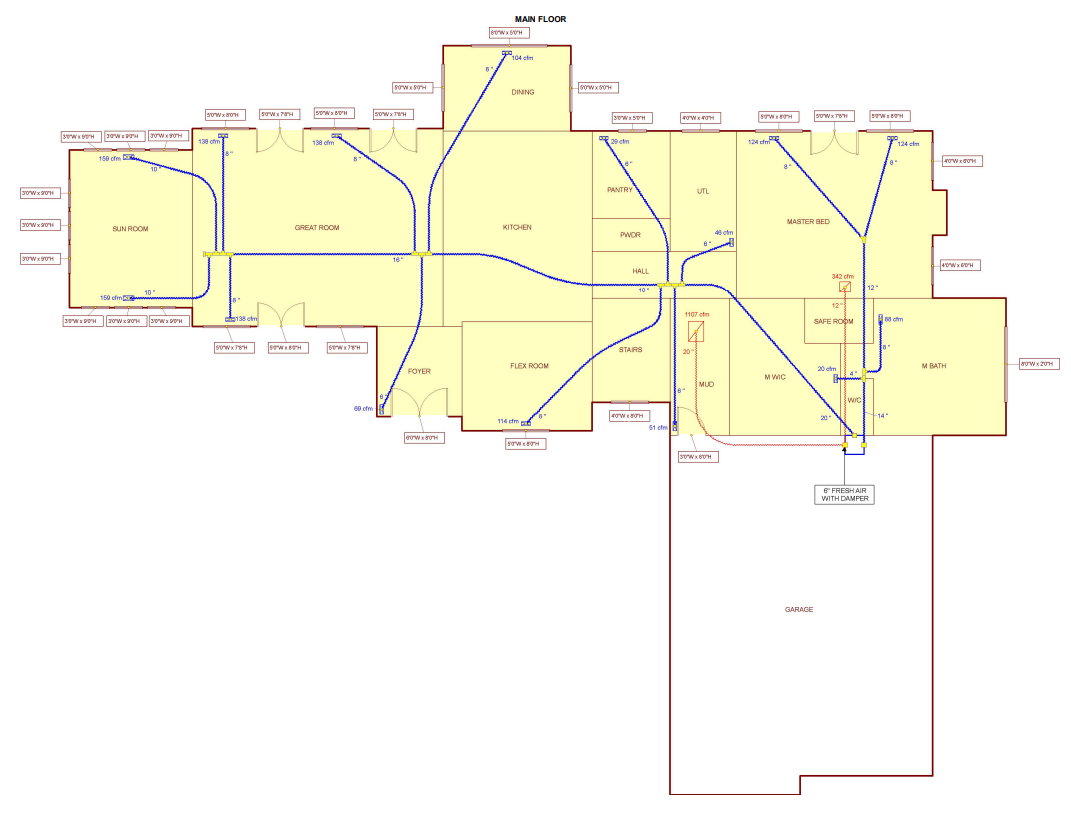
Manual D evaluates the floor plan, identifies the best trunk and branch layout, and calculates the diameter for each duct segment based on the airflow volume that segment must carry. The calculation accounts for friction losses in straight runs, pressure drops at fittings and transitions, and the total external static pressure the blower must overcome to move air through the system. Proper duct sizing prevents hot or cold spots caused by insufficient airflow and reduces energy waste from leaks or excessive pressure.
After the duct system is installed according to Manual D specifications, you'll notice consistent temperatures in every room, quieter operation from properly sized ducts that don't whistle or rumble, and better humidity control because the system delivers the designed airflow volume. The documentation includes a duct layout diagram, sizing schedules for each run, and airflow targets for the HVAC contractor to verify during installation and commissioning.
Manual D calculations are based on the equipment selected during Manual S, so changes to the HVAC model or capacity require duct design adjustments to maintain proper airflow distribution. The process also considers register placement, return air pathways, and how the duct layout integrates with the home's structural framing and mechanical systems.
Answers to Frequent Service Questions
Duct design directly affects comfort and efficiency, so understanding what Manual D involves helps builders and homeowners make informed decisions during the HVAC planning phase.
What happens if ductwork is installed without Manual D calculations?
Improperly sized ducts create pressure imbalances that reduce airflow to some rooms while oversupplying others, which causes uneven temperatures, increased energy use, and excessive blower strain that shortens system lifespan.
How does duct sizing affect humidity control?
Properly designed ducts deliver the correct airflow volume that allows the system to run long enough to remove moisture during cooling cycles, while undersized ducts restrict airflow and cause short cycling that prevents adequate dehumidification.
Why is Manual D required in Idaho but optional in some other states?
Idaho building codes mandate duct design calculations to verify proper airflow distribution and system performance, while states like Washington and Minnesota may only require load and equipment sizing calculations depending on jurisdiction.
What factors determine duct layout and sizing?
Manual D accounts for the distance air must travel, the number of fittings and bends, the static pressure rating of the blower, and the CFM requirement for each room based on Manual J load data.
How does the company's installation experience improve duct design accuracy?
Onsite builder coordination and real-world ductwork installation knowledge help identify practical routing options, avoid conflicts with framing and utilities, and create layouts that contractors can install efficiently in Meridian construction projects.
Load Calc Designs completes Manual D duct design using ACCA standards and practical installation experience that supports balanced airflow and long-term system performance. Submit your residential project details to receive detailed duct sizing and layout documentation.